Singapore’s world-renowned Changi International Airport is set to get even bigger, as construction officially begins on its highly anticipated fifth terminal. At a ceremony led by Prime Minister Lawrence Wong on May 14, Singapore marked the start of work on Terminal 5, which is slated to open in the mid-2030s and further cement Changi’s reputation as a global aviation leader.
Unlike airports that separate domestic and international flights, every departure at Changi is international, allowing for a seamless experience across all terminals. CEO Yam Kum Weng of the Changi Group described the new project as “mega yet cozy,” promising a travel environment that is both grand in scale and warmly personal.
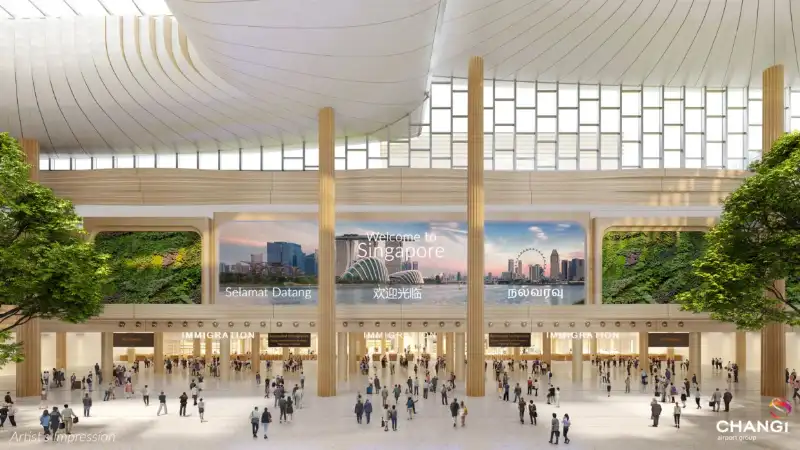
Originally announced in 2013 but delayed by the pandemic, the Terminal 5 project now incorporates lessons learned from Covid-19. Enhanced features include advanced ventilation systems that can be activated in response to a pandemic and flexible spaces that can be quickly isolated if necessary. The terminal will feature contactless, document-free entry, relying on biometric verification for all passengers. A unique layered roof design will support airflow and enable rapid compartmentalization of the terminal during health emergencies.
Upon completion, T5 will become the main hub for Singapore Airlines and its budget affiliate, Scoot, consolidating operations that are currently spread across different terminals.
One of Changi’s key draws is its wide array of attractions and amenities, making it more than just an airport. Passengers can explore themed gardens—featuring butterflies, cacti, water lilies, sunflowers, and orchids—enjoy playgrounds, race down a giant slide, swim in a rooftop pool, or catch a movie. The dazzling Changi Jewel, a ten-story luxury complex with the world’s largest indoor waterfall, has become a destination in itself, open even to non-travelers.
Trent Tesch, the lead designer from Kohn Pedersen Fox, highlighted the philosophy behind the expansion: “Efficiency and experience are not mutually exclusive. Too often, airports become impersonal machines for moving people. T5 is envisioned as a vibrant microcity—lush, layered, and unmistakably Singaporean.”
Singapore’s tropical climate, with its heat and humidity, was a core consideration in the terminal’s design. The rooftop solar power system will not only support the airport but will also generate enough electricity to supply about 20,000 four-room apartments each year, according to project partners.
Changi’s global reach is impressive, with over 68 million passengers passing through in the past year, ranking it as the world’s fourth-busiest air hub. The airport offers direct flights to 170 cities worldwide, serving as a major gateway between Asia and the world.