


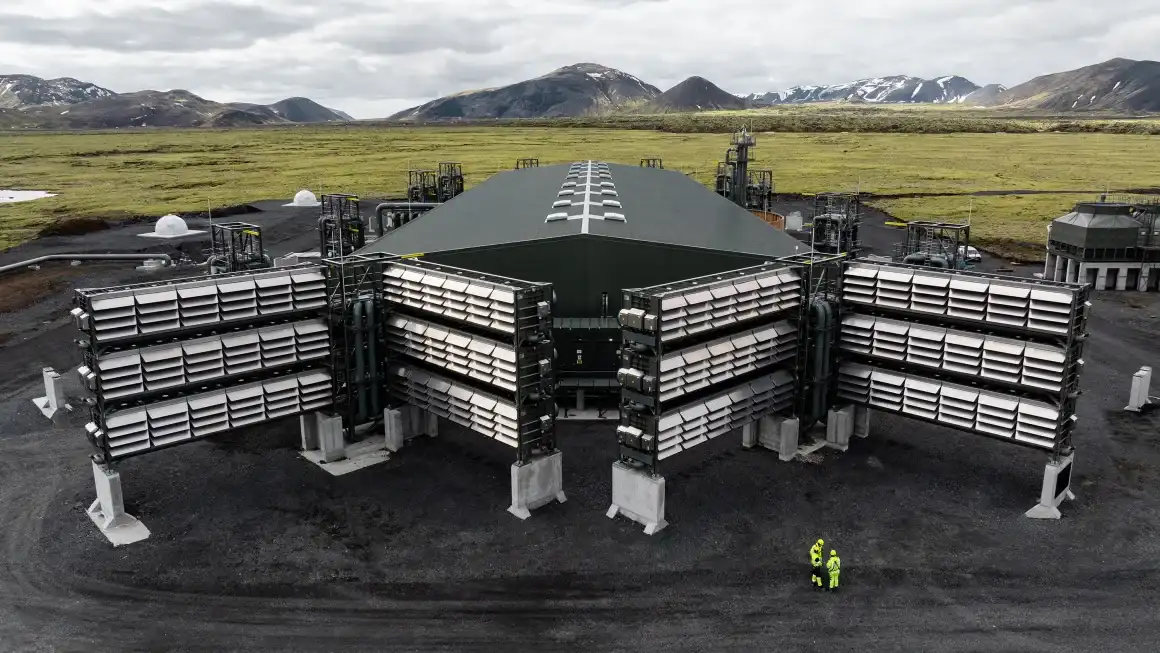

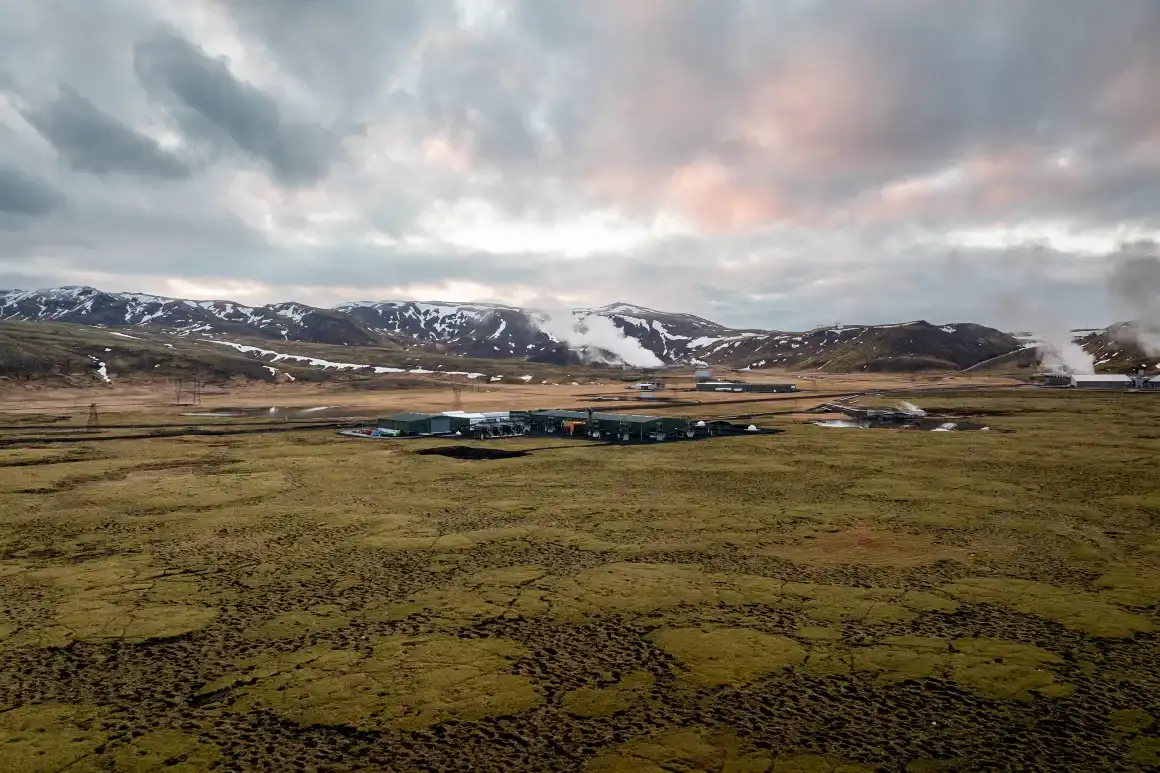
A groundbreaking climate solution has gone online in Iceland, where Swiss company Climeworks has launched what it claims is the world’s largest direct air capture (DAC) facility — a machine capable of removing carbon dioxide from the atmosphere like a giant vacuum. Named Mammoth, the facility represents a major step forward in the global effort to combat climate change.
What Is Mammoth and How Does It Work?
Mammoth is Climeworks’ second commercial DAC plant, and it’s ten times larger than its predecessor, Orca, which began operations in 2021. Like other DAC systems, Mammoth works by pulling air into machines that chemically extract carbon dioxide. Once captured, the CO₂ is injected deep underground in partnership with Icelandic firm Carbfix, where it reacts with basalt rock and transforms into solid stone — a process that permanently locks away the carbon.
Geothermal-Powered, Modular Design
The entire facility runs on Iceland’s abundant geothermal energy, making the carbon removal process itself nearly emissions-free. Mammoth features a modular setup, with space for 72 stackable “collector containers” — the units responsible for pulling CO₂ from the air. At launch, 12 units are operational, with more to come in the coming months.
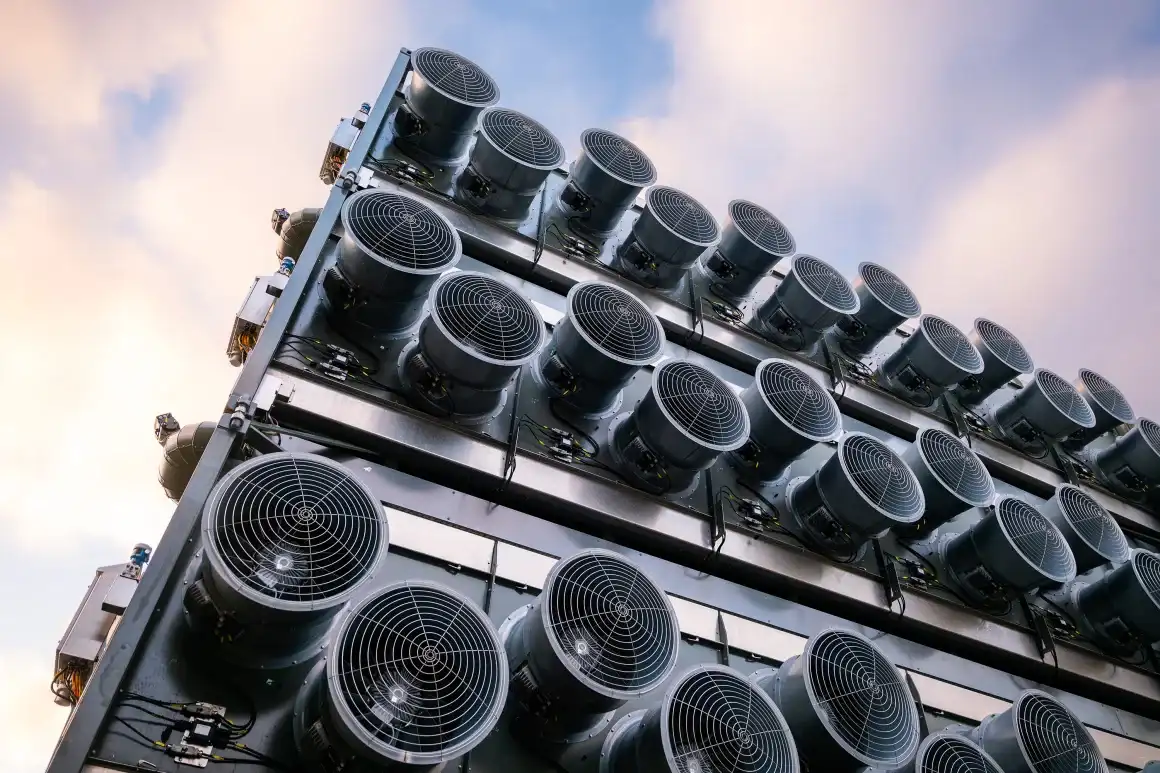
Once fully scaled, the plant will be able to capture 36,000 metric tons of carbon dioxide annually — roughly the same climate benefit as removing 7,800 gas-powered cars from the road each year.
The Big Picture: Hope, Hype, and Hurdles
As interest grows in climate solutions that go beyond emission reductions, technologies like DAC are gaining traction among governments, investors, and scientists. Still, carbon removal remains a contentious topic.
Cost and Scale Challenges
Critics point out that DAC is still expensive and not yet scalable. Climeworks acknowledges this, with current costs hovering closer to $1,000 per ton of carbon removed — far above the widely cited goal of $100 per ton that would make the technology cost-competitive. However, Climeworks co-founder Jan Wurzbacher says the company aims to bring costs down to $300–$350 by 2030 and eventually reach $100 by 2050.
Only a Drop in the Ocean — For Now
While Mammoth is the largest DAC facility operating today, its output remains minuscule compared to global needs. According to the International Energy Agency, the world must remove 70 million tons of CO₂ per year by 2030 to meet climate targets. Current capacity across all DAC plants stands at just 0.01 million tons annually.
Global Expansion and Competitive Landscape
Climeworks is not alone in the DAC race. In Texas, Occidental Petroleum is building a massive DAC plant called Stratos, projected to capture 500,000 tons of CO₂ each year. However, that project has drawn criticism for plans to use the captured carbon for enhanced oil recovery — injecting CO₂ into old wells to extract more fossil fuel, potentially undermining climate goals.
Climeworks Takes a Different Path
Unlike some competitors, Climeworks distances itself from fossil fuel interests, focusing purely on carbon removal and long-term storage. The company envisions scaling up significantly — aiming to remove 1 million tons of CO₂ per year by 2030 and 1 billion by 2050. Future projects are being considered in the United States and Kenya.
- Current Capacity: 36,000 tons of CO₂ annually (once fully operational)
- Technology: Direct air capture with underground mineralization
- Energy Source: Icelandic geothermal power
- Long-Term Goal: 1 billion tons removed per year by 2050
Conclusion: A Giant Step with a Long Journey Ahead
Mammoth may not be the silver bullet for solving climate change, but it’s an important milestone in the development of scalable carbon removal technologies. As the world struggles to meet emissions targets, DAC is emerging as a critical — albeit costly and complex — tool in the climate fight. Its success will depend not only on technological breakthroughs but also on strong policy support and responsible implementation.


