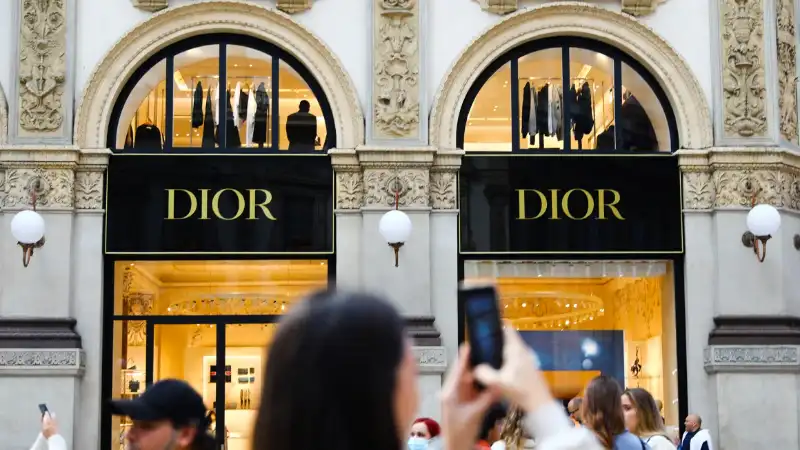

Dior, the renowned luxury fashion house owned by LVMH, has agreed to a series of commitments to settle an investigation by Italy’s competition authority into allegations that the brand and its subsidiaries misled consumers about working conditions in its supply chain.
Italy’s antitrust regulator announced Wednesday that it would close its inquiry after Dior put forward remedies deemed sufficient to address potential violations. The regulator emphasized that its decision did not constitute a finding of wrongdoing but considered the steps taken by Dior to be an adequate resolution.
Among its commitments, Dior will provide €2 million (about $2.3 million) over the next five years to support projects aimed at helping victims of labor exploitation. The decision follows last year’s revelations by Milan prosecutors of workshops where underpaid, often undocumented immigrant workers produced luxury leather goods for Dior and Armani at a fraction of their retail price.
The investigation focused on a stark contrast between the brand’s public messaging about ethical craftsmanship and the labor practices uncovered in its supply chain. In addition to financial support, Dior has pledged to:
- Revise its ethical and corporate social responsibility statements to reflect stricter standards
- Implement tougher procedures for supplier selection and monitoring
“Dior partnered closely with the Authority to define a robust set of commitments that increase transparency and strengthen oversight throughout its supply chain,” the company said in a separate statement on Wednesday.
However, Italian consumer group Codacons criticized the outcome as too lenient, arguing that the financial commitment is small and that Dior escaped any formal penalty. Last year, Italian authorities appointed special commissioners to oversee the supply chains of both Dior and Armani’s outsourcing units, a regime lifted earlier this year as brands worked to address the issues.
Just last week, a unit of Valentino was placed under judicial administration for a year after Italian courts uncovered worker abuse in its own supply chain, highlighting broader problems within the luxury fashion industry.