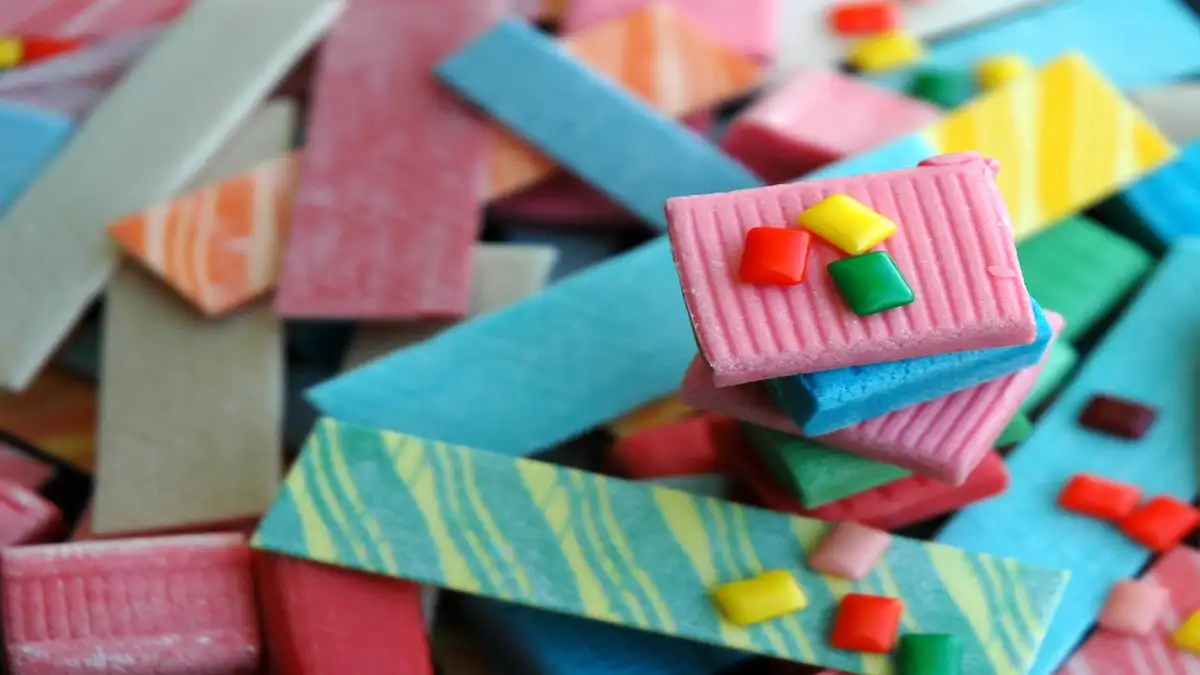

As awareness of microplastics continues to grow, a new study adds a surprising everyday item to the list of potential exposure sources — chewing gum. Researchers have discovered that just one piece of gum can release hundreds, even thousands, of microplastic particles into your saliva during a typical chewing session.
Gum: A Hidden Source of Microplastics
The pilot study, led by Dr. Sanjay Mohanty of UCLA’s Samueli School of Engineering, will be presented at the American Chemical Society’s biannual conference in San Diego. Pending peer review, the findings are expected to be published in the Journal of Hazardous Materials Letters.
Not to Alarm, But to Inform
“We’re not trying to create panic,” said Mohanty. “There’s still no conclusive evidence that microplastics are harmful to humans, but we do know we’re exposed to them on a daily basis. Our goal was to examine one more route of exposure — chewing gum.”
Understanding the Science
Microplastics are tiny fragments of plastic — less than 5 millimeters down to about 1 micrometer. Anything smaller is considered nanoplastic. While synthetic polymers are the usual suspects, chewing gum often includes both synthetic and natural polymers to enhance texture and flavor retention.
Previous research has shown microplastics in various body tissues and fluids — including blood, lungs, placenta, brain, and testicles — primarily entering the body through ingestion or inhalation. But until now, chewing gum hadn’t been rigorously studied as a direct contributor.
Why Gum?
“Gum is unique — it’s the only food we knowingly put in our mouths that contains plastic polymers as a core ingredient,” Mohanty explained. “Other foods pick up microplastics through packaging or processing. With gum, it starts in the recipe.”
The Experiment
The team examined 10 types of popular gum in the U.S., evenly split between synthetic and natural formulations. However, most manufacturers don’t disclose what their gum bases are made of — making the analysis even more critical.
- Each gum sample was chewed by a human subject for four minutes.
- Saliva was collected every 30 seconds using centrifuge tubes.
- Participants rinsed their mouths with purified water post-chew to capture all particles.
- Some samples were chewed for up to 20 minutes to track long-term particle release.
To isolate the microplastics, the researchers used advanced filtration techniques and chemical analysis, including microscopy. They subtracted any particles found in baseline rinse samples to ensure accurate counts.
What They Found
- On average, 1 gram of gum released about 100 microplastic particles.
- Some samples released up to 637 microplastics per gram.
- 94% of microplastics were released in the first eight minutes of chewing.
Surprisingly, both synthetic and “natural” gums shed similar quantities of microplastics. The average for synthetic was 104 particles per gram — natural gum wasn’t far behind at 96.

What’s in Those Particles?
Four synthetic polymers made up most of the debris found in both gum types:
- Polyolefins
- Polyterephthalates (often found in water bottles)
- Polystyrenes
- Polyacrylamides
These are the same plastics found in everyday items — packaging, synthetic fabrics, and single-use containers.
Experts Weigh In
Dr. David Jones of the University of Portsmouth said the findings were expected: “When any plastic is subjected to heat, friction, or other stress — even chewing — microplastics will be released.”
Even so, he emphasized that the research provides critical early data. “We inhale, ingest, and absorb hundreds of thousands of plastic particles annually. Knowing one more source can help us better assess the risk.”
The Unknowns
The average particle size in the study was 82.6 micrometers — about the width of a human hair. But the analytical tools couldn’t detect anything smaller than 20 micrometers. That means the study likely underestimates the full extent of microplastic release, as nanoplastics — even more difficult to identify — may also be present.
What About Natural Gum?
The presence of synthetic plastics in “natural” gum raised some eyebrows. Researchers suggest this could stem from packaging contamination, lab error, or even undeclared additives by manufacturers. Without full ingredient transparency, it’s impossible to be sure.
Industry Response
The National Confectioners Association defended gum safety in a statement: “Gum has been safely enjoyed for over 100 years. Our members prioritize food safety and only use FDA-approved ingredients.”
Looking Ahead
Although this study doesn’t claim that chewing gum is dangerous, it does highlight yet another way microplastics may enter the human body. As research continues, scientists like Dr. Mohanty advocate for more transparency, better regulation, and a “precautionary approach” when it comes to plastics in food.
“Even if we don’t yet know the long-term health impacts,” said Dr. Leonardo Trasande of NYU, “we should be acting now — not waiting for conclusive proof to start reducing our exposure.”
In the end, the study may serve not only as a scientific breakthrough but also as a wake-up call — a reminder that even something as routine as chewing gum can carry hidden complexities in our increasingly plastic-filled world.