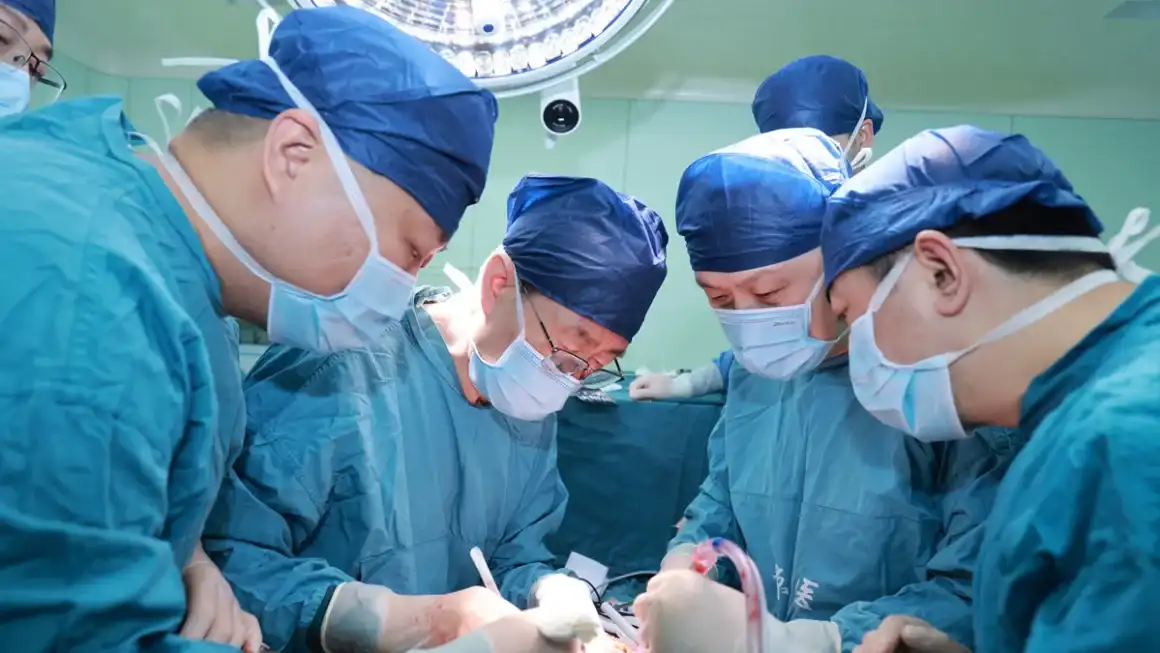

In a groundbreaking advancement for the field of organ transplantation, researchers in China have completed a rare and promising procedure — the transplant of a genetically modified pig liver into a human. The subject, a brain-dead individual, hosted the pig liver for 10 days with no signs of rejection, raising hopes for future solutions to the critical global organ shortage.
First-of-Its-Kind Success
This marks the first detailed public report of a gene-edited pig liver functioning inside a human body. According to a study published in Nature, the liver maintained proper blood flow and showed no immune rejection or excessive inflammation. Researchers described the organ as having “functioned very well in the human body.”
Why the Liver Matters
The liver is among the most complex organs in the human body. Unlike the heart or kidneys, which serve relatively singular functions, the liver juggles multiple responsibilities:
- Detoxifying harmful substances
- Producing bile for digestion
- Regulating blood sugar
- Processing nutrients and waste
- Producing clotting proteins
Because of these functions — and the liver’s dual blood supply — transplanting a pig liver into a human presents unique challenges. Yet, according to lead surgeon Dr. Lin Wang, the latest results suggest the barriers may not be insurmountable.
A Desperate Need for New Solutions
In the U.S. alone, over 9,000 patients are currently awaiting liver transplants. The demand far exceeds the available supply, forcing scientists to explore unconventional paths such as xenotransplantation — the transplantation of animal organs into humans.
Previous Progress in Xenotransplantation
Researchers have already made headway with pig kidney and heart transplants. Most notably, Penn Medicine previously conducted an external perfusion with a gene-edited pig liver, in which a deceased patient’s blood circulated through the organ outside the body. The patient remained stable for 72 hours, and no signs of inflammation were detected.
Details of the Chinese Procedure
The transplant, carried out in March 2024, involved a pig liver sourced from a genetically modified Bama miniature pig. Six gene edits were made to reduce the chance of rejection and improve compatibility. Notably, the human liver was left in place during the experiment — a cautious decision aimed at mitigating potential complications.
After 10 days, the experiment was concluded at the request of the patient’s family. While the team did not remove the human liver in this case, they have hinted at a separate, more ambitious procedure in which a human liver was completely replaced by a pig liver — though full details of that case have not yet been disclosed.
What Comes Next?
Experts around the world have praised the Chinese team’s efforts. Dr. Shimul Shah, a leading authority in xenotransplantation at Mass General Brigham, acknowledged the complexity of liver transplantation and noted the significance of this latest research.
“We’ve made more progress with kidneys and hearts, but this helps us understand how to advance liver xenotransplantation,” Shah said. “There’s still a lot to learn, but this is a major step.”
Beyond the Experiment
In addition to this recent breakthrough, the team in China has conducted a series of other cross-species transplants, including pig-to-monkey and pig-to-human procedures involving organs such as hearts, kidneys, corneas, and skin. One of their most recent pig kidney recipients is reportedly healthy enough to return home soon, with publication of the case expected in the near future.
The Bigger Picture
For those suffering from acute liver failure, time is often a luxury they can’t afford. Doctors typically have no alternative other than transplantation — a reality that makes advances like this one so vital. Gene-edited pig livers could one day serve as “bridge organs,” temporarily supporting patients while they await a suitable human donor.
“This shows it really may help bridge someone,” said Dr. Parsia Vagefi of UT Southwestern Medical Center, noting that existing treatments like liver dialysis and medications haven’t made the same kind of impact.
For now, the hope is that each incremental success brings science one step closer to the goal: providing an organ to every patient who needs one, when they need it most.